Many athletes worry that cold plunge pools will stiffen their muscles and slow recovery. The opposite is true. Research shows that controlled cold water immersion at around 7°C reduces muscle soreness by 20-25% compared to passive recovery. This article explores the science behind cold plunge therapy, explains why it accelerates recovery, and shows you how to use it safely for both athletic performance and stress relief.
Key Takeaways
| Point | Details |
|---|---|
| Recovery Speed | Cold plunge therapy shortens muscle soreness recovery time by 20-25% compared to standard rest |
| Optimal Protocol | Immerse at 7°C for 10-15 minutes, 3-4 times weekly for best anti-inflammatory results |
| Stress Reduction | Cold immersion activates the parasympathetic nervous system, lowering cortisol and boosting mood |
| Combined Benefits | Pairing cold plunge with infrared sauna enhances vascular function and neurochemical recovery |
Understanding Cold Plunge Therapy: What It Is and How It Works
Cold plunge therapy involves immersing your body in cold water maintained at approximately 7°C for therapeutic recovery. Unlike a quick cold shower, this controlled exposure triggers specific physiological responses that reduce inflammation and restore your nervous system.
The biological mechanisms are straightforward. When you enter cold water, your body constricts blood vessels near the skin surface. This vasoconstriction forces blood toward your core organs, then releases it back to your extremities when you exit. The process flushes out inflammatory markers like IL-6 and TNF-alpha, the compounds responsible for post-exercise muscle soreness.
Cold immersion also shifts your autonomic nervous system. Your parasympathetic response activates, slowing your heart rate and reducing stress hormones. This is the same state your body enters during deep meditation or restorative sleep.
The neurochemical benefits extend beyond immediate relaxation. Cold water exposure increases dopamine levels by up to 250%, improving motivation and mood for hours after your session. This dopamine spike is why many people report feeling energized and focused after a cold plunge, not drained.
Key physiological responses include:
- Reduced inflammatory cytokines that cause muscle damage and soreness
- Increased parasympathetic tone for better stress management
- Enhanced dopamine production for improved mood and motivation
- Balanced cortisol levels that help your body recover from training stress
These responses make cold plunge therapy particularly valuable for active professionals who need to recover quickly between training sessions while managing workplace stress.
The Science Behind Cold Plunge Benefits for Athletes and Active Professionals
Quantifiable research validates what athletes and wellness practitioners observe. A systematic review analyzing 17 studies found that regular cold water immersion reduces subjective muscle soreness by 20-25% compared to passive recovery. This translates to fewer rest days and more consistent training.
The inflammatory response tells the same story. Blood tests taken after cold plunge sessions show significant reductions in IL-6 and TNF-alpha, the primary markers of exercise induced inflammation. Lower inflammation means faster tissue repair and reduced chronic pain.
Your autonomic nervous system benefits are equally impressive. Research shows that parasympathetic activity, measured through heart rate variability, increases by 30% following cold water immersion. Higher parasympathetic tone correlates with better recovery, improved sleep quality, and reduced anxiety.
The neurochemical impact extends beyond the immediate post-plunge period. Cold exposure triggers a sustained dopamine increase that persists for several hours, supporting focus and motivation throughout your workday. This makes cold plunge therapy valuable for cognitive performance, not just physical recovery.
Recovery Improvement: Regular cold plunge use reduces muscle soreness recovery time by 20-25% compared to standard rest protocols.
Practical applications matter for Greater Manchester professionals balancing training with demanding careers. Cold plunge therapy fits into an optimal recovery workflow that addresses both physical strain and mental stress.
Key scientific findings include:
- 20-25% faster subjective muscle soreness recovery versus no intervention
- Measurable decreases in inflammatory markers IL-6 and TNF-alpha post-immersion
- 30% increase in parasympathetic nervous system activity for enhanced stress recovery
- Up to 250% dopamine elevation improving mood and cognitive function
These benefits accumulate with consistent use, making cold plunge therapy a cornerstone of science backed recovery protocols.
Common Misconceptions and Safety Considerations
The most persistent myth suggests that cold plunge pools cause muscle stiffness and delay recovery. Clinical evidence proves the opposite. Controlled cold water immersion reduces inflammation and accelerates healing by flushing metabolic waste from muscle tissue.
Another misconception involves timing. Some athletes believe longer immersion produces better results, but research shows diminishing returns after 15 minutes. Extended exposure beyond this threshold increases hypothermia risk without additional recovery benefits.
Temperature selection requires precision. Water colder than 5°C increases injury risk through excessive vasoconstriction and potential cold shock response. The optimal range sits around 7°C, balancing therapeutic benefits with safety. Water warmer than 10°C reduces anti-inflammatory effects.
Pro Tip: Start with 5 minute sessions at 7°C, then gradually increase to 10-15 minutes as your cold tolerance builds. This progressive approach minimizes shock response while maximizing adaptation.
Safety protocols protect you from adverse events. Screen for cardiovascular conditions, cold sensitivity disorders, and Raynaud’s phenomenon before starting cold plunge therapy. People with these conditions need medical clearance and modified protocols.
Key safety guidelines include:
- Limit initial sessions to 5 minutes, increasing gradually to 10-15 minutes
- Maintain water temperature around 7°C for optimal safety and efficacy
- Avoid immersion below 5°C which increases injury risk without added benefit
- Exit immediately if you experience chest pain, severe shivering, or numbness
- Never use cold plunge therapy alone; ensure someone knows your location
The cold plunge safety checklist provides additional protocols for first-time users and those with specific health considerations. Following evidence based guidelines ensures you gain benefits while avoiding unnecessary risks.
Cold Plunge Therapy in Practice: Protocols, Temperature, and Timing
Effective cold plunge therapy follows structured protocols that balance intensity with safety. Begin your journey with 5 minute immersions at 7°C. This duration allows your body to trigger the inflammatory response without overwhelming your thermal regulation system.
<https://www.youtube.com/embed/1uerS5JjjRI>
As your tolerance develops over 2-3 weeks, increase immersion time to 10-15 minutes. This extended exposure optimizes anti-inflammatory effects and maximizes dopamine release. Monitor your body’s response; excessive shivering or numbness signals you should exit immediately.
Session frequency determines cumulative benefits. Research supports 3-4 cold plunge sessions weekly following intense training or high stress work periods. This cadence allows adequate recovery between exposures while maintaining consistent anti-inflammatory stimulus.
Contrast therapy amplifies recovery benefits by pairing cold immersion with infrared sauna sessions. Start with 15 minutes in the sauna, transition to 10 minutes in the cold plunge, then return to the sauna for a final 10 minutes. This heat-cold-heat protocol enhances vascular function and nervous system recovery beyond either therapy alone.
Pro Tip: Schedule cold plunge sessions in the evening for better sleep quality, or use them post-training for immediate anti-inflammatory benefits. Morning sessions boost dopamine for all-day focus.
Practical implementation steps:
- Complete your training session or workday stress exposure
- Enter cold plunge water gradually, submerging up to your neck
- Focus on controlled breathing to manage the cold shock response
- Remain immersed for 10-15 minutes, monitoring for numbness or excessive shivering
- Exit slowly and warm up naturally; avoid hot showers immediately after
- Track your recovery markers like sleep quality and muscle soreness
Consistency matters more than intensity. Regular 10 minute sessions produce better long term results than occasional 20 minute extreme exposures. The cold plunge guidelines detail additional protocols for specific recovery goals.
Combining cold plunge with other recovery modalities creates synergistic effects. Contrast therapy benefits include enhanced circulation, improved nervous system balance, and accelerated metabolic waste removal.
Comparing Cold Plunge Pools with Other Recovery Methods
Cold plunge therapy occupies a unique position in the recovery landscape. Its primary mechanism involves direct anti-inflammatory response through reduced cytokine production and enhanced circulation. This differs fundamentally from other popular modalities.
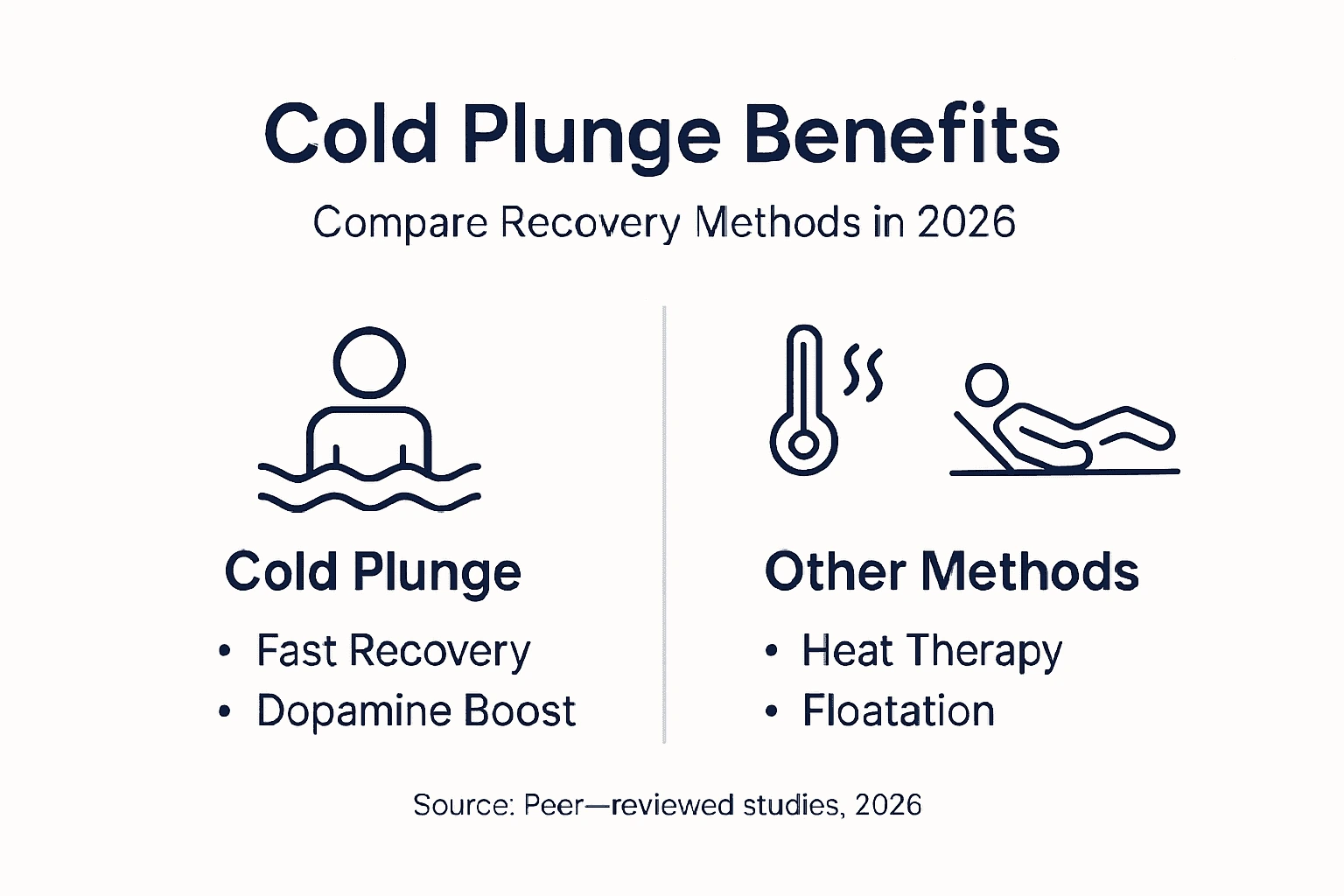
Contrast therapy, which pairs cold plunge with infrared sauna, leverages temperature extremes to create vascular pumping. The heat-cold cycle forces blood vessels to rapidly dilate and constrict, flushing metabolic waste more effectively than either therapy alone. This combined approach also balances sympathetic and parasympathetic nervous system activation.
Floatation therapy addresses recovery from a different angle. Sensory deprivation in Epsom salt filled pods primarily reduces mental stress and anxiety by removing external stimuli. While cold plunge targets physical inflammation, floatation focuses on nervous system restoration and cortisol reduction.
| Recovery Method | Primary Mechanism | Best Used For | Session Duration |
|---|---|---|---|
| Cold Plunge | Anti-inflammatory response, dopamine boost | Post-training muscle recovery, stress reduction | 10-15 minutes |
| Contrast Therapy | Vascular pumping, nervous system balance | Enhanced circulation, deep recovery | 35-40 minutes total |
| Floatation Therapy | Sensory deprivation, cortisol reduction | Mental restoration, anxiety relief, chronic pain | 60-90 minutes |
These therapies complement rather than compete with each other. Active professionals benefit from combining approaches based on current needs. After intense training, prioritize cold plunge for immediate anti-inflammatory effects. During high stress work periods, add floatation for mental recovery.
The contrast therapy explanation details how alternating temperature exposures enhance recovery beyond single modality use. Many athletes structure their week to include cold plunge sessions post-training and floatation sessions for mental restoration.
Key complementary benefits include:
- Cold plunge reduces physical inflammation while floatation addresses mental stress
- Sauna sessions after cold plunge enhance circulation and deepen relaxation
- Combined protocols address both sympathetic and parasympathetic nervous system needs
- Sequential use maximizes dopamine, reduces cortisol, and accelerates tissue repair
Understanding these distinctions helps you construct personalized recovery protocols. Floatation therapy basics provide additional context for building comprehensive wellness routines.
Case Studies and Local Practical Access in Greater Manchester
Real world applications demonstrate cold plunge therapy’s practical benefits. A UK-based rugby player documented a 40% reduction in post-match fatigue after implementing twice weekly cold plunge sessions at 7°C for 12 minutes. His recovery time between matches decreased from 72 hours to 48 hours, allowing more intense training.
Greater Manchester professionals have similar access to advanced cold plunge facilities. Float Therapy Wilmslow maintains a dedicated cold plunge pool with precise temperature control at 7°C, ensuring optimal therapeutic conditions without the safety risks of inconsistent home setups.
The facility’s integrated approach combines cold plunge with infrared sauna and floatation pods, allowing you to construct personalized recovery protocols. This eliminates the need to visit multiple locations or invest in expensive home equipment.
Local active professionals use these services for both athletic recovery and stress management. A Wilmslow based marketing executive reports improved sleep quality and reduced anxiety after adding weekly cold plunge sessions to her routine. She pairs the cold exposure with floatation therapy for comprehensive mental and physical restoration.
Practical access points include:
- Professional temperature monitoring ensuring consistent 7°C exposure
- Expert guidance on immersion protocols for different recovery goals
- Combined optimal recovery workflow options
- Private facilities with showers and relaxation spaces
- Flexible scheduling for busy professional and training schedules
The advanced float therapy benefits extend when combined with cold plunge and sauna sessions. This multi-modal approach addresses the complex recovery needs of athletes and professionals managing high performance demands.
Access to professional facilities matters because proper protocols require consistent temperature control and safety monitoring. The contrast therapy recovery benefits multiply when executed with precision equipment and expert guidance.
Summary and How to Get Started with Cold Plunge Therapy
Cold plunge therapy delivers measurable recovery benefits through well understood biological mechanisms. Immersion at 7°C reduces inflammatory markers, accelerates muscle soreness recovery by 20-25%, and increases dopamine for improved mood and focus.
The evidence dispels common misconceptions. Cold plunges do not cause stiffness; they reduce it by flushing inflammatory compounds from muscle tissue. Safety protocols are straightforward: maintain 7°C water temperature, limit sessions to 10-15 minutes, and use the therapy 3-4 times weekly for optimal results.
Contrast therapy enhances these benefits by pairing cold plunge with infrared sauna sessions. The alternating temperature exposure improves vascular function and balances your autonomic nervous system more effectively than either therapy alone.
Practical next steps for Greater Manchester residents:
- Trial cold plunge therapy at facilities with professional temperature control and guidance
- Start with 5 minute sessions, gradually increasing to 10-15 minutes over 2-3 weeks
- Schedule sessions post-training or during high stress periods for targeted relief
- Consider combining with infrared sauna for enhanced circulation and recovery
- Track recovery markers like muscle soreness, sleep quality, and mood
The cold plunge checklist provides detailed protocols for safe implementation. Whether you prioritize athletic performance or stress management, cold plunge therapy offers evidence backed benefits accessible through local facilities.
Enhance Your Recovery with Float Therapy Wilmslow
Float Therapy Wilmslow provides Greater Manchester athletes and professionals with advanced cold plunge pools maintained at the optimal 7°C for maximum anti-inflammatory benefit. Our facility combines cold immersion with infrared sauna and ice bath contrast therapy in a private, professionally monitored environment. Expert staff guide you through safe protocols tailored to your recovery goals, whether you need post-training muscle repair or stress relief between demanding work projects. Access comprehensive wellness solutions including floatation therapy services for complete mental and physical restoration. Review our cold plunge safety guide to prepare for your first session.
Frequently Asked Questions about Cold Plunge Pools
How often should I use a cold plunge pool for best results?
Use cold plunge therapy 3-4 times weekly following intense training sessions or high stress work periods. This frequency provides consistent anti-inflammatory stimulus while allowing adequate recovery between exposures. More frequent use offers diminishing returns without additional benefits.
Is cold plunge therapy safe for beginners?
Yes, when you follow proper protocols. Start with 5 minute sessions at 7°C, focusing on controlled breathing to manage the cold shock response. Gradually increase duration to 10-15 minutes over 2-3 weeks as your tolerance builds. Avoid cold plunge if you have cardiovascular conditions without medical clearance.
Can cold plunge pools help with stress as well as muscle recovery?
Cold immersion activates your parasympathetic nervous system, reducing cortisol and increasing dopamine by up to 250%. This neurochemical shift improves mood, enhances focus, and reduces anxiety for hours after your session. The benefits extend beyond physical recovery to mental restoration.
How does cold plunge compare to ice baths at home?
Professional cold plunge pools maintain consistent 7°C temperature, ensuring optimal therapeutic benefits without safety risks. Home ice baths fluctuate in temperature and require constant monitoring. Professional facilities also provide expert guidance on protocols and immediate assistance if needed.
What should I expect during my first cold plunge experience?
You will experience an immediate cold shock response with rapid breathing and increased heart rate. This normalizes within 30-60 seconds as your body adapts. Focus on slow, controlled breathing. After exiting, you will feel energized and alert as dopamine levels rise. Muscle soreness typically decreases within 24-48 hours.