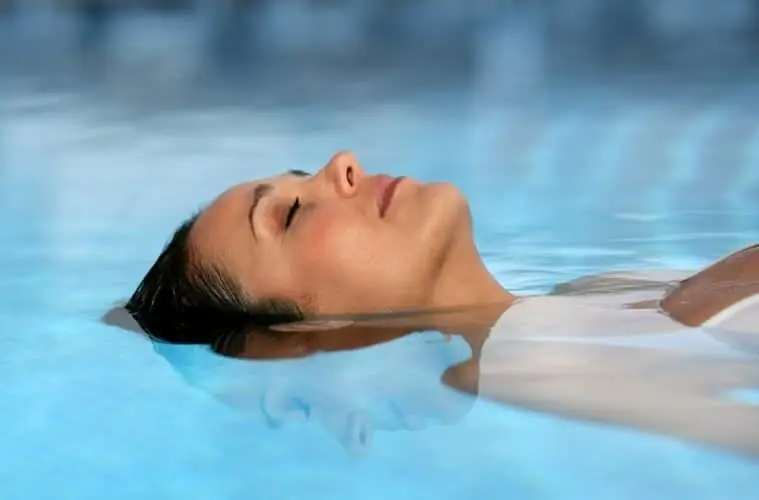
Float therapy is absolutely worth it. For one blissful hour you get near-total rest — and most people step out noticeably calmer and physically restored, a genuine switch-off that's almost impossible to find anywhere else. The research is impressively strong, and at around £33 a float on our intro offer, it's outstanding value.
We think it's one of the best hours you can give yourself all month. Below we'll show you exactly what a session delivers, the research that backs it up, and why the numbers make floating such an easy yes.
What do you actually get for your money?
You get around 60 minutes of pure, uninterrupted rest: no light, no sound, no phone, no gravity — half a tonne of Epsom salt floats you effortlessly on warm, skin-temperature water. Most people come out calmer, looser and clearer-headed than they've felt in weeks. It's the reset your nervous system has been craving.
Here's everything that hour buys you:
- Deep rest — sixty minutes with no notifications, no decisions and nothing to react to. Many people find it far more restorative than an ordinary evening off.
- Physical release — the buoyancy lifts the load off your spine, joints and muscles, and many people feel their tension ease as their body finally lets go.
- A quiet mind — with nothing pulling at your attention, many people find their thoughts settle naturally. People often describe floating as "meditation without the effort".
- Real recovery — the magnesium-rich Epsom salt and the enforced stillness make it a favourite for post-training and post-stress recovery.
What does the research actually say?
The evidence is genuinely impressive. Study after study links floating with lower stress, reduced anxiety and better physical recovery — and these aren't small or flimsy trials. Floating is a wellness experience rather than a medical treatment, but the research behind the benefits people report is more robust than most first-timers expect.
- A 2025 systematic review in BMC Complementary Medicine and Therapies surveyed 63 studies covering roughly 1,838 participants and concluded that floatation-REST appears effective for pain, stress and clinical anxiety, as well as aspects of athletic performance.
- A 2018 study in PLOS ONE found that a single one-hour float produced a large reduction in state anxiety across 50 people, alongside significant drops in stress, muscle tension and low mood — from just one session.
- A 2005 meta-analysis pooling 27 studies (449 participants) found floatation-REST had positive effects on physiology, including lower cortisol and lower blood pressure, with a relatively strong overall effect size.
Read fairly, that's a consistent, research-backed picture: floating is repeatedly associated with lower stress and reduced anxiety, and many people find it deeply calming. It isn't a cure or treatment for any medical condition — but as a research-backed way to unwind and recover, it stands on remarkably solid ground.
What does it cost — and why is it such good value?
Brilliant value, especially on the intro offer. A single float at Float Therapy Wilmslow is £48, and our intro offer is 3 floats for £99 — around £33 a session. That's less than most premium fitness classes, for an hour of complete restoration. See our pricing page for current rates and a fuller breakdown in how much does float therapy cost in the UK.
The number that really matters is value per hour — and floating shines:
| Option | Typical cost | What you get for the hour |
|---|---|---|
| Intro offer (3 floats) | £99 (~£33 each) | The best value — full sensory rest across three visits, so the benefits build |
| Single float | £48 | Full sensory rest and deep physical release, no commitment |
| Premium fitness class | £20–£30 | An hour of hard work — great, but the opposite of rest |
| A night out | £40–£80 | Fun, but usually the opposite of recovery |
We point most first-timers to the 3-for-£99 offer because it's the best deal we do and the benefits of floating tend to build with repeat visits — the second and third floats often feel even better than the first. Once you're hooked, how often should you float helps you find your ideal rhythm.
Who loves floating?
Just about everyone who tries it — but it's especially perfect if any of this sounds like you:
- You carry a lot of day-to-day stress and long to properly switch off.
- You rarely get uninterrupted, screen-free time that's genuinely your own.
- You train hard or are on your feet all day and want a recovery tool many people swear by.
- You've wanted to meditate but find it easier when the calm comes to you.
- You value a calm, premium hour and want to treat yourself to something restorative.
New to it all and wondering what the hour actually feels like? Your first float: what to expect walks you through every step — most people relax far more easily than they imagine, and you're always fully in control, with the pod door open as much as you like.
The verdict
Yes — floating is well worth it, and then some. The best-evidenced benefits are exactly the ones people want most: research associates it with less stress, more calm and better physical recovery. Add in an hour of genuine peace and a price of around £33 a float on the intro offer, and it's one of the easiest, most rewarding treats you can book. Give yourself the hour — you'll understand the moment you step out.
FAQ
Is float therapy actually worth the money? Yes. For deep rest, lower stress and physical recovery it's one of the best-value treatments around — the research on stress and anxiety is genuinely strong, and at around £33 a float on the 3-for-£99 intro offer it's superb value for a full hour of restoration.
How much does a float cost at Float Therapy Wilmslow? A single float is £48, and the intro offer is 3 floats for £99 (around £33 each) — our best value. Check our pricing page for current rates.
Does floating really reduce stress and anxiety? Research consistently associates it with lower stress and reduced anxiety — a 2025 systematic review found floatation-REST appears effective for stress and clinical anxiety, and many people find it beautifully calming. It's a wellness experience, not a treatment or cure for any medical condition.
How many floats should I book to start? The 3-for-£99 intro offer is the ideal way in. The benefits of floating tend to build across visits, so three sessions let you feel the full effect — and it's our best-value option. See how often should you float for guidance.
Will I be able to relax if I've never floated before? Almost certainly — most first-timers relax more easily than they expect. The pod door stays open as much as you like, and you're always in control. Your first float: what to expect walks you through it.
Is floating suitable for everyone? It's a gentle experience most healthy adults love. If you're pregnant or have a heart condition, just let us know so we can look after you properly — give us a ring on 07810 145975 with any questions before you book.
Ready to feel it for yourself? The best way in is the intro offer — book 3 floats for £99 and treat yourself to three of the calmest hours of your month. You can learn more on our float therapy page.
Sources
- Lashgari, Chen, Gregory & Maoz (2025). Systematic review of floatation-REST, BMC Complementary Medicine and Therapies. Read the review{external}
- Feinstein et al. (2018). Short-term floatation-REST and anxiety, PLOS ONE. Read the study{external}
- Van Dierendonck & Te Nijenhuis (2005). Meta-analysis of floatation-REST, Psychology & Health. Read the meta-analysis{external}