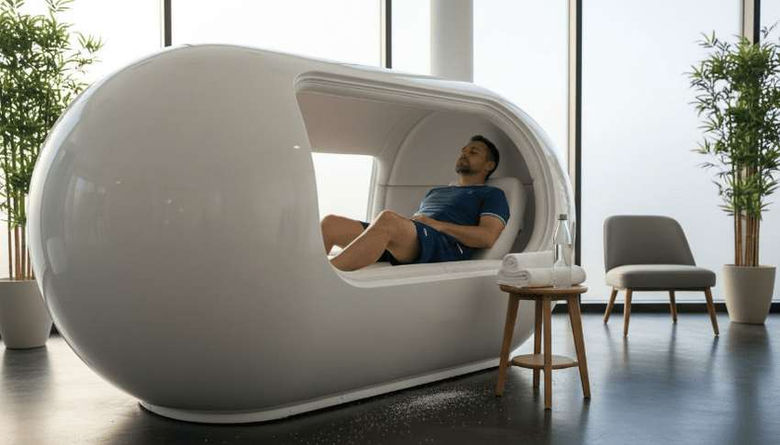
Sensory deprivation is the deliberate reduction of external stimulation – light, sound, touch and even the sensation of gravity – so the brain and body can rest more completely than everyday life allows. Its best-known modern form is the float tank, or sensory deprivation pod: a quiet, lightless pod of shallow, skin-temperature water so saturated with Epsom salt that you float effortlessly on the surface.
Far from being an endurance test, it is one of the most comfortable ways to do absolutely nothing that has ever been invented. That's the short answer. This guide covers the rest: what sensory deprivation actually means, how a float tank works, what an hour in one genuinely feels like, the other forms it takes, what the research suggests about its benefits – and how to try it for yourself at our studio in Wilmslow, Cheshire.
What does sensory deprivation actually mean?
Sensory deprivation means intentionally cutting down the information reaching your senses – sight, sound, touch and temperature – in a controlled, comfortable way. It isn't about numbing yourself; it's about giving an overstimulated nervous system a proper break.
Think about how much input your brain processes in an ordinary hour: screens, notifications, traffic, background chatter, the temperature of the room, the chair pressing into your back, your own weight against the floor. None of it feels like work, but all of it is being monitored, filtered and responded to, constantly. Even when you "relax" on the sofa, most of that processing carries on.
Sensory deprivation turns the volume down on all of it at once. When the stream of external input slows to a trickle, the brain shifts gears. Attention drifts inward, mental chatter gradually settles, and many people describe reaching a state somewhere between deep relaxation and meditation – without any of the effort meditation normally takes.
The idea has a longer history than you might expect. The first flotation tank was built in the 1950s by the neuroscientist John C. Lilly, who wanted to study what the brain does when external stimulation is removed. The commercial tanks that followed in the 1970s have since evolved into the spacious, temperature-controlled pods used today, and researchers now study the practice under a friendlier name: flotation-REST, short for Restricted Environmental Stimulation Therapy.
One important distinction is worth making early. Everything in this article refers to voluntary, controlled and comfortable sensory reduction – an experience you choose, shape and can end at any moment. That is a world away from the involuntary isolation of old laboratory experiments, which is where the phrase sometimes picks up unfair baggage.
How does a sensory deprivation tank work?
A float tank works by removing, one by one, the things your senses normally keep track of. You lie back in about 25cm of water saturated with roughly 500kg of Epsom salt, warmed to skin temperature, and float on the surface with zero effort – in as much darkness and silence as you choose.
Each element of the pod handles a different sense:
- Buoyancy – the sense of gravity. The sheer concentration of Epsom salt makes the water far denser than the sea. You float like a cork whether you can swim or not, with no pressure points anywhere on your body. Muscles and joints that spend all day working against gravity get to stand down completely.
- Temperature – the sense of touch. The water is held at around 35°C, matching the surface temperature of your skin. After a few minutes it becomes genuinely hard to tell where your body ends and the water begins, which is stranger and lovelier than it sounds.
- Darkness – sight. With the light off, the pod is completely dark. Your eyes can be open or closed; it makes no difference.
- Silence – hearing. The pod shuts out the outside world. Some people float in total silence; others start with gentle music and let it fade.
The crucial word in all of this is choose. In a modern pod, every element is under your control – the light, the sound, even the lid. Nothing locks, nothing is forced, and there is no wrong way to float. Towards the end of your session, soft music fades in to let you know time is nearly up, so you're never startled back to reality.
If you'd like the fuller picture of the pods themselves, our float therapy page covers the studio side of things in more detail.
What does a float tank session feel like?
A float tank session feels a little strange for the first ten minutes, then remarkably peaceful. Most people spend the opening stretch settling in, and the rest of the hour somewhere between deep relaxation and light sleep – with time doing odd, pleasant things along the way.
Here's how a typical first float unfolds. You lie back and the salt takes your weight immediately – there's a moment of "oh, it really does hold you up" that everyone seems to have. For the first 10–15 minutes your mind will probably race. That's completely normal. The to-do list, the odd itch, the novelty of the situation: your brain isn't used to having nothing to do, and it takes a little while to accept the invitation. The trick is not to fight the thoughts but to let them drift past, like clouds crossing a sky.
Then, at some point you won't be able to pinpoint afterwards, things go quiet. The water and air are the same temperature as your skin, so the edges of your body seem to soften. Many floaters describe feeling weightless, or as if they're floating in space rather than water. Some experience gentle drifting imagery or find that ideas and solutions surface unbidden. Others simply doze – and nodding off in a float tank is both common and safe, thanks to the buoyancy of the salt.
Time behaves oddly in there. An hour can feel like twenty minutes, or like a whole afternoon of rest. When the music fades in to signal the end, most people are surprised the session is over.
Afterwards comes the part regular floaters talk about most: the calm, slightly floaty ease that follows you out of the studio – often for the rest of the day. If you're curious about the practical details of a first visit, we've written a full guide to your first float.
What if I don't like enclosed spaces?
You're in control of everything, and the lid can stay open. Worries about claustrophobia are the most common question we hear – and the most quickly resolved.
The pods are far roomier inside than photos suggest, the door never locks, and you can float with the light on, the lid ajar or the lid fully open – whatever feels right. You can sit up or step out at any moment. In practice, most first-timers who start with the light on find themselves choosing darkness within a session or two, because it turns out the dark in a float pod feels cosy rather than confining. Our full guide, is float therapy claustrophobic, goes deeper – but the short version is: you set the terms, always.
What are some examples of sensory deprivation techniques?
Float tanks are the most complete form of sensory deprivation, but anything that deliberately reduces input to one or more senses counts. Most other techniques quiet a single sense at a time.
A few examples you may have come across:
- Flotation-REST – the float tank or pod itself, which reduces sight, sound, touch, temperature difference and the feeling of gravity all at once. The all-in-one nature is exactly why an hour in a pod feels so unlike anything else on this list.
- Darkness retreats – extended stays in fully darkened rooms, usually over several days, used in some meditation traditions. Powerful, but a serious commitment.
- Blindfold meditation – simply removing visual input during meditation. Free, easy and a good taster of how much the brain settles when one sense goes quiet.
- Noise-cancelling headphones and quiet rooms – reducing the auditory load. Increasingly popular with anyone who finds busy environments draining.
- Weighted blankets – these calm the sense of touch with steady, even pressure rather than removing it, which is why many people find them settling.
- Digital detox – less a sensory technique than a modern necessity: deliberately reducing screens and notifications to give your attention a rest.
Interestingly, the opposite approach – deliberately strong sensation – has its own following. Contrast therapy, which pairs an infrared sauna with an ice bath, works by giving the senses something emphatic to respond to rather than nothing at all. We offer it alongside floating at the studio, and plenty of guests enjoy the two as complementary opposites.
What are the benefits of sensory deprivation?
People float mainly to ease stress and muscle tension, clear their heads and rest properly – and early research in the flotation-REST field is encouraging. It's best understood as profound rest rather than a medical treatment.
Stress and tension. This is the big one. Studies of flotation-REST suggest that participants often feel calmer and less tense after a session, and it's not hard to see why: a full hour with nothing to react to is something most of us haven't experienced since childhood. Guests regularly tell us it's the only place their shoulders genuinely drop.
Muscle and body recovery. Floating takes the pressure off your muscles and joints in a way no position on land – even lying in bed – quite matches. That's why athletes and gym-goers often build floating into their recovery routines after heavy training, and why people who spend all day at a desk or on their feet find it such a relief. The warm Epsom-salt water is simply a pleasant place for a tired body to be.
Sleep. Many guests report sleeping deeply the night after a float, and some enjoy the drowsy, unhurried state so much they drift off mid-session – which, as we cover in our guide to sleeping in float tanks, is safe: the buoyancy keeps you comfortably on the surface. If your evenings are usually spent winding down from the day rather than actually resting, an hour of enforced stillness can feel like a reset for your whole rhythm.
Head space. Floating is sometimes described as effortless meditation, and the description fits. With nothing external to attend to, the mind gets rare room to wander, settle and sort. Some floaters use the time to think through a problem; most find the best sessions are the ones where they stop trying to do anything at all.
Two honest caveats. First, much of the research involves small studies, so "studies suggest" is the right level of confidence – floating supports relaxation and recovery; it doesn't cure anything, and it's a complement to good habits and professional care, not a substitute. Second, like exercise, the effects build with regularity: one float is lovely, but regular floaters get the most from it. Our guide on how often should you float goes into the rhythms that work best.
Is sensory deprivation safe – and who should check first?
For most healthy adults, floating at a professionally run studio is safe. The water is only about 25cm deep, the salt keeps you effortlessly on the surface, and you remain in control of the session throughout. A few groups should have a quick word with a professional first.
It's worth saying plainly: the scare stories attached to "sensory deprivation" come from mid-century isolation experiments that bear no resemblance to an hour in a warm pod you control completely. Floating is voluntary, comfortable and ends whenever you want it to.
That said, check before booking if any of the following apply:
- Epilepsy or a history of seizures – speak to your GP first.
- Heart conditions or very low blood pressure – again, a quick GP conversation is sensible.
- Pregnancy – many pregnant guests find floating wonderfully comfortable, particularly later on, but check with your midwife first.
- Open cuts, recent tattoos or active skin conditions – salt water and broken skin are an uncomfortable mix, so wait until things have healed.
- Freshly dyed hair – purely practical: give it a week or so, for the sake of both your colour and our water.
And a simple one: don't float under the influence of alcohol. The whole point is a clear, rested head. For anything we haven't covered here, our FAQs page collects the questions we're asked most.
What happens at a float session in Wilmslow?
At Float Therapy Wilmslow, a float lasts 60 minutes in your own private room with a pod and shower, and sessions cost from £48 – with an intro pack and memberships that bring the price down if floating becomes a habit.
Here's the shape of a visit. Arrive about 10–15 minutes early so you can settle in without rushing – it's worth skipping caffeine for a few hours beforehand and avoiding a heavy meal, purely for comfort. We'll show you to your room and walk you through how everything works. You shower, step into the pod, and the hour is yours: lights and sound set however you like, lid open or closed. When the music fades back in, you shower off the salt, take your time getting ready, and rejoin the world at your own pace.
There's very little to bring. Sessions are private, so most people float without swimwear, though you're welcome to wear it. If you use contact lenses, bring a case – floating is best with them out.
On pricing: a single float is from £48, our introductory pack offers three floats for £99, and memberships start from £40/month for regular floaters. Full details are on our pricing page. Alongside the float pods, the studio also offers contrast therapy – an infrared sauna paired with an ice bath – and massage with Jade, whose menu of eight treatments includes 60 or 90 minute options on the aromatherapy and deep tissue massages. Plenty of guests combine a float with one or the other.
You'll find us at 82 Chapel Lane, Wilmslow, SK9 5JH, open 9am–9pm every day, with 350+ five-star Google reviews from floaters across Cheshire. Sessions can be booked in a couple of minutes at bookings.float-therapy.co.uk.
Frequently asked questions
Is a sensory deprivation tank the same as a float tank?
Yes. "Sensory deprivation tank", "float tank", "flotation tank", "isolation tank" and "float pod" all describe the same thing: a light-controlled, sound-controlled pod of skin-temperature Epsom-salt water designed for effortless floating.
How long do you stay in a sensory deprivation tank?
A standard session at Float Therapy Wilmslow is 60 minutes. That's long enough to get past the settling-in stage and into the deeply restful part of the float, and gentle music fades in near the end so you always know when time is nearly up.
How much does a sensory deprivation tank session cost?
At Float Therapy Wilmslow, a single 60 minute float costs from £48. New floaters can try an introductory pack of three floats for £99, and memberships start from £40/month.
Do you need to be able to swim?
No. The water is only around 25cm deep and so saturated with Epsom salt that your body floats on the surface automatically. Swimming ability makes no difference at all.
Can you fall asleep in a float tank?
Yes, and it's safe. The density of the salt water keeps you floating face-up even if you doze off, and many floaters happily nod off mid-session. The music at the end of the session will gently wake you.
What if I'm claustrophobic?
You stay in complete control: the lid can stay open, the light can stay on, nothing locks, and you can step out at any time. Most people who arrive nervous are surprised by how roomy the pod feels.
An hour of genuine quiet is rarer than it should be. If you're ready to find out what sensory deprivation feels like from the inside, book your float – we're open 9am–9pm, every day, on Chapel Lane in Wilmslow.
Keep reading: Benefits of Sensory Deprivation for Stress Relief