
Muscle soreness lingers long after your toughest sessions in Wilmslow or Greater Manchester, leaving you searching for solutions that go beyond the basics. For many athletic professionals and wellness enthusiasts, Epsom salt baths offer a natural approach to recovery and stress relief without resorting to pharmaceuticals. Rooted in centuries-old tradition and now recognised for allowing magnesium absorption through the skin, these soothing baths provide a practical boost for injury prevention and relaxation between hard pushes.
Key Takeaways
| Point | Details |
|---|---|
| Epsom Salt Baths Enhance Recovery | Submerging in Epsom salt baths allows for effective magnesium absorption, aiding muscle relaxation and recovery post-exercise. |
| Magnesium’s Role Is Crucial | Magnesium significantly reduces muscle soreness and supports overall nervous system function, promoting faster recovery after intense training. |
| Practical Benefits for Athletes | Athletes can benefit from improved muscle recovery, better sleep quality, and reduced inflammation by incorporating regular Epsom salt baths into their routine. |
| Usage Guidelines Are Important | To maximise benefits and minimise risks, use Epsom salt baths at appropriate temperatures and durations, adhering to recommended guidelines on frequency. |
What Are Epsom Salt Baths and How Do They Work?
Epsom salt baths are a natural recovery method that’s been trusted for centuries. These baths involve dissolving magnesium sulfate granules in warm water and soaking for approximately 20 minutes to relieve muscle tension and support athletic recovery.
The name comes from the mineral-rich waters originally found near Epsom in Surrey, where locals discovered the therapeutic properties way back in the seventeenth century. What started as a folk remedy has evolved into a scientifically-backed recovery technique used by athletes across Greater Manchester and beyond.
How the Science Works
When you soak in an Epsom salt bath, something straightforward happens. Your skin acts as a permeable barrier, allowing magnesium and sulphate ions to penetrate and enter your system through transdermal absorption.
Magnesium plays a critical role in muscle function and recovery:
- Reduces muscle soreness and tension after intense training sessions
- Helps relax muscle fibres that have been worked hard during exercise
- Supports the nervous system’s ability to downregulate stress responses
- Aids in reducing inflammation within muscle tissue
The sulphate component works alongside magnesium to assist detoxification processes and support joint health. Together, these minerals create an environment where your muscles can genuinely relax rather than remain in a state of tension.
The following table summarises how magnesium and sulphate support athletic recovery through Epsom salt baths:
| Mineral | Main Function | Physiological Impact | Role in Recovery |
|---|---|---|---|
| Magnesium | Muscle relaxation | Regulates nerve signals, reduces tension | Faster recovery, less soreness |
| Sulphate | Detoxification | Supports joint health, aids removal of toxins | Improved flexibility, aids repair |
The combination of magnesium and sulphate working through your skin creates a dual-action recovery mechanism that oral supplements simply cannot replicate.
Why Athletes Choose Epsom Salt Immersion
For someone training regularly in Wilmslow or Greater Manchester, the appeal is practical. After a tough gym session, a hard run, or a competitive match, your muscles need genuine recovery support. Bathing in mineral-rich waters allows your body to absorb what it needs without additional supplements or medications.
The warm water itself enhances the process by opening your pores and increasing circulation, which means the magnesium and sulphate can work more effectively. You’re not just soaking; you’re actively supporting your body’s natural recovery systems.
Key benefits for athletes include:
- Faster muscle recovery between training sessions
- Reduced delayed-onset muscle soreness (DOMS)
- Better sleep quality due to magnesium’s calming effects
- Natural inflammation management without pharmaceutical intervention
_Pro tip:_ _Soak for at least 20 minutes in water around 40°C (104°F) to allow adequate absorption, and aim to use Epsom salt baths 2-3 times weekly for optimal recovery results._
Magnesium Absorption and Its Benefits for Muscles
Magnesium is arguably the most critical mineral for athletic recovery. Your muscles cannot relax, contract properly, or repair themselves without it. When you soak in an Epsom salt bath, you’re delivering this essential nutrient directly where your body needs it most.
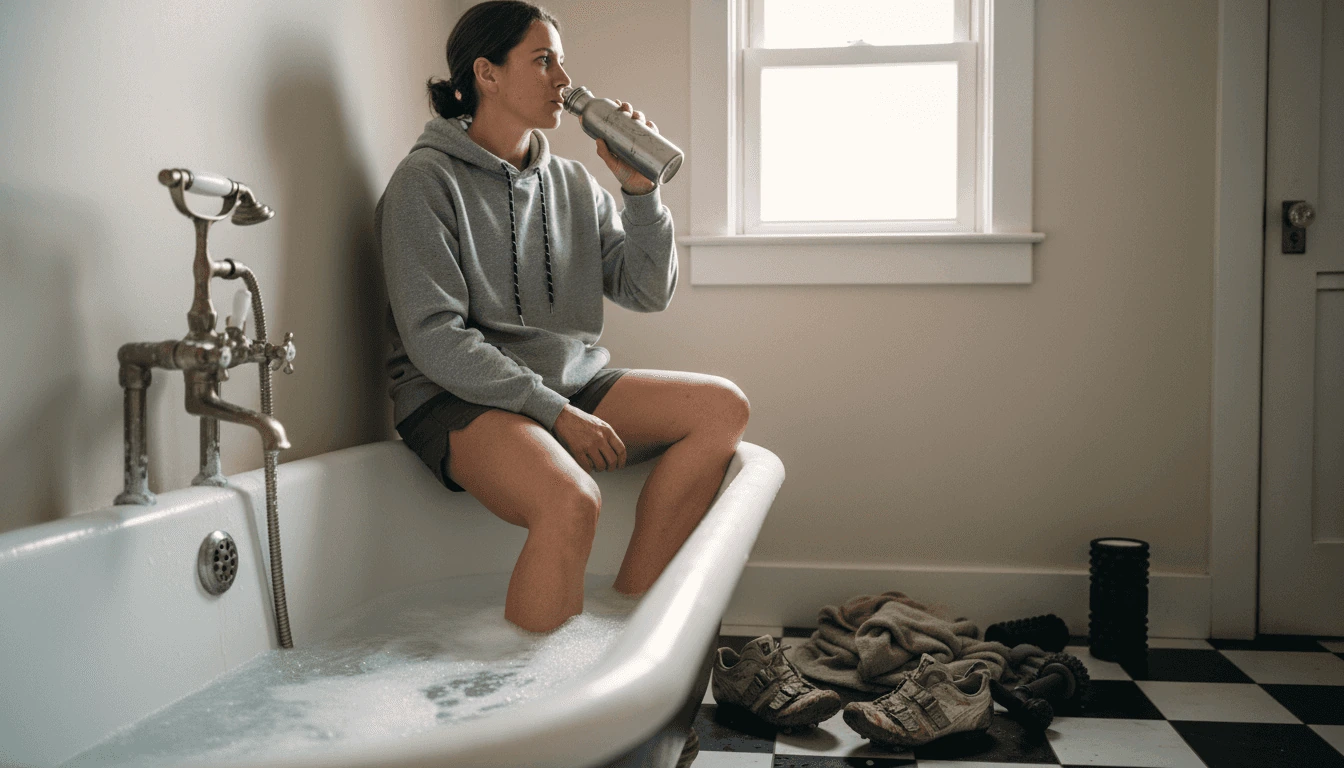
Unlike oral supplements that must pass through your digestive system, topical absorption through an Epsom salt bath bypasses digestive inefficiency. The magnesium ions penetrate your skin and enter your bloodstream relatively quickly, reaching muscle tissue within minutes rather than hours.
How Magnesium Works at the Muscle Level
Magnesium controls muscle contraction and relaxation through its role in regulating nerve signals. Muscle and nerve function depend entirely on magnesium’s ability to manage electrical charges in your cells.
When you train hard, your muscles repeatedly contract and then need to release. Without sufficient magnesium, they stay partially tensioned, causing that persistent ache you feel days after a brutal session. This is delayed-onset muscle soreness, or DOMS.
Magnesium directly addresses DOMS through several mechanisms:
- Relaxes muscle fibres that remain contracted after exertion
- Reduces lactic acid build-up within muscle tissue
- Supports protein synthesis , the process of repairing micro-tears from training
- Helps regulate blood pressure and reduces systemic stress on muscles
- Contributes to energy production so muscles recover faster
Magnesium is the difference between muscles that stay tight for days and muscles that genuinely relax and recover between sessions.
Why Topical Absorption Matters for Athletes
Your skin acts as a permeable barrier, and magnesium can pass through it. This is particularly valuable because topical absorption through baths may contribute to muscle relaxation and reduce cramps in ways that support genuine athletic recovery.
For someone training 4-5 times weekly in Wilmslow, this matters practically. An Epsom salt soak delivers magnesium directly to fatigued muscles without waiting for digestive processing or dealing with potential gastrointestinal upset that oral supplements sometimes cause.
You also absorb magnesium better when you’re relaxed. The warm water and the act of slowing down signals your nervous system to shift into recovery mode, which actually improves mineral absorption.
Key benefits you’ll notice:
- Reduced muscle cramps and spasms after training
- Faster recovery between intense sessions
- Better sleep quality due to magnesium’s calming effect on the nervous system
- Less persistent soreness in the days following hard workouts
_Pro tip:_ _Add your Epsom salt soak within 2-4 hours post-workout when muscles are still warm and most receptive to magnesium absorption, maximising recovery benefit._
Epsom Salt Baths for Athletic Recovery and Wellness
Athletic recovery isn’t just about getting back to the gym faster. It’s about protecting your long-term performance, reducing injury risk, and maintaining the quality of life that comes with consistent training. Epsom salt baths address both the immediate soreness and the underlying physiological stress from hard training.
<https://www.youtube.com/embed/QSlIHCu2Smw>
When you push your body through intense exercise, you create micro-damage in muscle fibres. This damage triggers inflammation, lactic acid accumulation, and muscular tension that can linger for days. An Epsom salt soak actively interrupts this recovery cycle rather than passively waiting for it to pass.
The Recovery Mechanism
Athletes experience two types of soreness after training. Acute soreness happens during or immediately after exercise, whilst delayed-onset muscle soreness (DOMS) peaks 24-72 hours later. Epsom salt baths are used by athletes to relieve muscle soreness and promote recovery through magnesium absorption.
The magnesium absorbed during soaking reduces inflammation at the cellular level. This isn’t just comfort; it’s genuine physiological recovery. Your muscles relax more completely, tension patterns break, and repair processes accelerate.
Benefits for athletic performance include:
- Faster recovery between training sessions, allowing you to train harder more frequently
- Reduced muscle cramps and spasms that limit performance
- Improved sleep quality, where actual tissue repair occurs
- Lower systemic inflammation, protecting joints and connective tissue
- Enhanced psychological recovery and stress relief
Consistent Epsom salt bathing transforms your training capacity by shortening recovery windows, not just making soreness slightly less annoying.
Practical Application for Wilmslow Athletes
There’s a difference between theoretical benefits and real-world recovery protocols. Soaking in warm Epsom salt baths may provide comfort, relax muscles, and reduce stiffness, potentially aiding athletic recovery and wellness.
For someone balancing work commitments with serious training in Greater Manchester, this matters. A 20-minute soak fits realistically into your schedule whilst delivering measurable recovery benefit. You’re not adding another complicated supplement protocol or spending hours in treatment.
Many athletes in Wilmslow integrate Epsom salt baths as a weekly recovery ritual, particularly after high-volume training weeks. Some use them post-workout, whilst others prefer evening soaks to improve sleep quality. Both approaches work; consistency matters more than timing.
Key wellness outcomes athletes report:
- Reduced overall muscular tension throughout the week
- Better sleep quality and deeper rest
- Decreased anxiety and improved mental recovery
- Fewer nagging injuries and aches
- Enhanced sense of wellbeing
_Pro tip:_ _Use an Epsom salt bath twice weekly on your most intense training days to create a genuine recovery advantage, especially if you’re training 4+ times per week._
Key Differences: Epsom Salt Versus Other Bath Types
Not all bath salts work the same way. Walk into a pharmacy or wellness shop and you’ll find baking soda baths, sea salt soaks, mineral baths, and various other options. Understanding what makes Epsom salt distinct matters if you’re serious about athletic recovery.
The key difference lies in composition and what your body actually absorbs. Epsom salt contains magnesium sulphate , a specific mineral compound that directly supports muscle function and recovery. Other bath types target different outcomes entirely.
Epsom Salt Versus Sea Salt and Baking Soda
Salt baths commonly use baking soda or sea salt to soothe and cleanse skin areas, promote healing, and reduce infection risk. These salts focus on external skin health rather than internal muscle recovery.
Sea salt contains trace minerals but lacks the magnesium concentration that makes Epsom salt effective for athletic soreness. Baking soda works primarily as a skin cleanser and pH balancer, addressing irritation rather than muscle tension.
Here’s how they differ:
- Epsom salt : Absorbed through skin, reduces muscle soreness and systemic inflammation
- Sea salt : Skin cleansing, mineral trace content, supports external healing
- Baking soda : Alkaline properties, skin pH balancing, gentle for sensitive skin
For athletic recovery specifically, Epsom salt outperforms these alternatives because magnesium directly enters your system and affects muscle physiology.
Here is a comparison of the effects of common bath types used by athletes for recovery and wellness:
| Bath Type | Primary Purpose | Key Ingredient | Impact on Muscles |
|---|---|---|---|
| Epsom Salt Bath | Muscle recovery and relaxation | Magnesium sulphate | Direct magnesium absorption, reduces soreness |
| Sea Salt Bath | Skin cleansing and healing | Sodium chloride, trace minerals | Minor mineral support, no muscle relief |
| Baking Soda Bath | Skin pH balance and irritation relief | Sodium bicarbonate | No effect on muscle tension |
| Bleach Bath | Antiseptic for skin conditions | Diluted sodium hypochlorite | No impact on muscle recovery |
Epsom Salt Versus Bleach Baths
Bleach baths represent an entirely different category. Bleach baths use diluted sodium hypochlorite solutions and are mainly intended to reduce bacterial colonisation in skin conditions like eczema. This is medical treatment, not recovery support.
Unlike Epsom salt baths that focus on muscle relaxation through magnesium absorption, bleach baths serve antiseptic purposes with distinct safety precautions. They’re prescribed for specific skin infections, not athletic recovery.
Epsom salt baths are recovery tools for healthy athletes. Bleach baths are medical interventions for bacterial skin conditions. They solve completely different problems.
Why This Matters for Your Recovery Protocol
Choosing the right bath type ensures you’re actually addressing your specific need. If you’re managing post-workout soreness, Epsom salt delivers targeted benefit. If you’re dealing with infected skin, you need different intervention entirely.
Athletes in Greater Manchester often experiment with multiple bath types, expecting similar results. They don’t produce similar results because their mechanisms differ fundamentally. Epsom salt’s magnesium absorption simply doesn’t occur with alternatives.
Key distinctions to remember:
- Only Epsom salt provides meaningful magnesium absorption for muscle recovery
- Sea salt and baking soda benefit skin health, not muscle physiology
- Bleach baths address bacterial colonisation, not muscle soreness
- Using the wrong bath type wastes time and money on ineffective recovery
_Pro tip:_ _If you’re investing time in bath recovery, commit to genuine Epsom salt with adequate magnesium concentration rather than substituting alternatives that won’t deliver the same physiological benefit._
Risks, Safety Guidelines, and Best Practice Advice
Epsom salt baths are generally safe when used correctly, but they’re not risk-free. Understanding potential complications and following proper guidelines ensures you gain recovery benefits without unwanted side effects.
Most athletes use Epsom salt baths without incident. However, certain conditions, excessive use, or improper preparation can cause problems. Being informed protects your health and maximises recovery benefit.
Understanding Potential Side Effects
Epsom salts can cause side effects such as upset stomach, diarrhoea, or in rare cases, excess magnesium levels when taken internally or overused externally. For bathing purposes, external overuse is the primary concern.
Most side effects occur with excessive soaking or when individuals have specific medical conditions. Your skin is a barrier, but magnesium can accumulate if you bathe too frequently or for extended periods.
Potential risks include:
- Skin irritation or itching in sensitive individuals
- Dizziness or lightheadedness from prolonged hot water exposure
- Magnesium overload in people with kidney dysfunction
- Dehydration from extended soaking sessions
- Electrolyte imbalances with extremely frequent use
Sensible use of Epsom salt baths rarely causes problems. The risk emerges when people treat them as unlimited recovery tools and soak excessively.
Who Should Avoid or Modify Epsom Salt Baths
Certain groups need to be cautious. People with kidney disease or heart conditions should consult a doctor before regular Epsom salt bathing. Magnesium affects electrolyte balance, which these conditions manage carefully.
If you have a magnesium sulphate allergy , you cannot use Epsom salt baths at all. Check your medical history or discuss with your GP if you’re uncertain.
Groups requiring medical clearance:
- People with chronic kidney disease
- Those with heart arrhythmias or cardiovascular disease
- Individuals taking magnesium-dependent medications
- Anyone with a known magnesium sulphate allergy
- Pregnant individuals (consult your midwife first)
Safe Use Guidelines
Following basic safety protocols prevents nearly all complications. Safety guidelines stress the importance of avoiding overly hot water, prolonged soaking, and monitoring for skin irritation, particularly in sensitive individuals or those with medical conditions.
Here’s what works:
- Use water between 37-40°C (98-104°F), not scorching hot
- Soak for 15-20 minutes maximum, not longer
- Limit bathing to 2-3 times weekly, not daily
- Dissolve salts completely before entering the bath
- Exit immediately if you feel dizzy or uncomfortable
- Shower after soaking to remove residual salt
- Stay hydrated before and after bathing
These simple precautions keep Epsom salt bathing safe whilst delivering genuine recovery benefit.
_Pro tip:_ _Start with 15-minute soaks twice weekly and monitor how your body responds before increasing frequency or duration; this gradual approach identifies any individual sensitivity early._
Enhance Your Recovery with Expert Support at Float Therapy Wilmslow
If you are seeking to elevate your athletic recovery beyond traditional Epsom salt baths, you understand the importance of magnesium absorption , muscle relaxation , and managing inflammation for faster recovery and reduced soreness. While the article highlights the powerful effects of mineral-rich water soaks, athletes often need a more advanced and comprehensive approach to fully restore both body and mind after intense training sessions.
At Float Therapy Wilmslow, we combine the natural benefits of medical-grade Epsom salts with cutting-edge floatation therapy and professional contrast therapy. Our sensory deprivation pods let you experience deep meditative stillness while benefiting from transdermal magnesium absorption. Complement this with our infrared sauna and cold plunge pool sessions designed specifically to reduce inflammation and boost dopamine levels for accelerated recovery. Serving Wilmslow and Greater Manchester, our private rooms and luxury facilities provide the perfect environment to relieve muscle tension, improve sleep quality, and enhance overall wellness.
Ready to transform your recovery ritual and unlock superior athletic performance? Discover how our blend of ancient mineral remedies and modern biohacking techniques can help you train harder, recover faster, and feel your best. Visit Float Therapy Wilmslow to book your session and start regaining control over your body today.
Frequently Asked Questions
What are Epsom salt baths?
Epsom salt baths involve dissolving magnesium sulfate granules in warm water and soaking for about 20 minutes. They are used to relieve muscle tension and support athletic recovery.
How do Epsom salt baths work for muscle recovery?
When soaking in Epsom salt, magnesium and sulphate ions are absorbed through the skin, helping to reduce muscle soreness, relax muscle fibres, and assist in detoxification and inflammation management.
How often should I use Epsom salt baths for optimal recovery?
It is recommended to soak in Epsom salt baths 2-3 times a week for optimal recovery, especially after intense training sessions. Each soak should last around 15-20 minutes.
Are there any risks associated with Epsom salt baths?
While generally safe, risks include skin irritation, dehydration from prolonged soaking, and potential electrolyte imbalances, particularly for individuals with kidney disease or heart conditions. It is crucial to follow safety guidelines to minimise these risks.