Long days in demanding roles can leave even the most resilient professionals feeling mentally drained and physically tense. For those in Wilmslow and Alderley Edge seeking true respite, sensory deprivation therapy offers a controlled escape from constant stimulation, creating space for genuine recovery and sharpened mental clarity. Drawing on scientific research, this guide debunks myths and shares how floatation therapy’s profound relaxation environment can help you find deeper calm and support optimal performance.
Table of Contents
- Sensory Deprivation Explained And Common Myths
- Floatation Therapy: How Pods Work
- Mental Health Benefits And Stress Reduction
- Physical Recovery And Pain Management
- Potential Risks And Safety Considerations
- Comparing Sensory Deprivation To Other Therapies
Key Takeaways
| Point | Details |
|---|---|
| Therapeutic Benefits of Sensory Deprivation | Sensory deprivation promotes deep relaxation, reduces stress, and enhances mental clarity when professionally administered. |
| Common Misconceptions | Many myths about sensory deprivation are unfounded; it poses no inherent risk when proper protocols are followed. |
| Floatation Therapy Mechanics | Floatation pods create an environment that minimises sensory input, fostering neurological and physical healing. |
| Complementary Therapy | Sensory deprivation can effectively support traditional therapies by enhancing relaxation and psychological resilience without dependency on pharmaceuticals. |
Sensory Deprivation Explained and Common Myths
Sensory deprivation is a sophisticated therapeutic technique designed to reduce external stimuli, creating an environment of profound stillness and introspection. By minimising sensory input through specialised floatation environments, individuals can experience unique physiological and psychological benefits that extend far beyond traditional relaxation methods.
The core mechanism of sensory deprivation involves eliminating external sensory signals – visual, auditory, tactile, and proprioceptive – through carefully controlled environments. Physiological research from Durham University demonstrates that controlled sensory reduction can induce remarkable states of mental clarity and relaxation, challenging popular misconceptions about the practice.
Common myths about sensory deprivation persist, often rooted in misunderstandings about its psychological impact. Contrary to sensationalist claims, scientific research reveals that sensory deprivation is not inherently harmful when professionally administered. Here are key misconceptions debunked:
- Myth 1: Sensory deprivation causes permanent psychological damage
- Myth 2: The experience is equivalent to torture or extreme isolation
- Myth 3: Hallucinations are an inevitable and dangerous outcome
- Myth 4: Only individuals with specific mental health conditions can benefit
In reality, academic research demonstrates that controlled sensory deprivation can provide significant therapeutic advantages. The technique induces deep relaxation, reduces stress hormones, and enables profound meditative states that promote mental restoration.
Sensory deprivation is not about eliminating sensation, but creating a controlled environment for neurological reset and profound introspection.
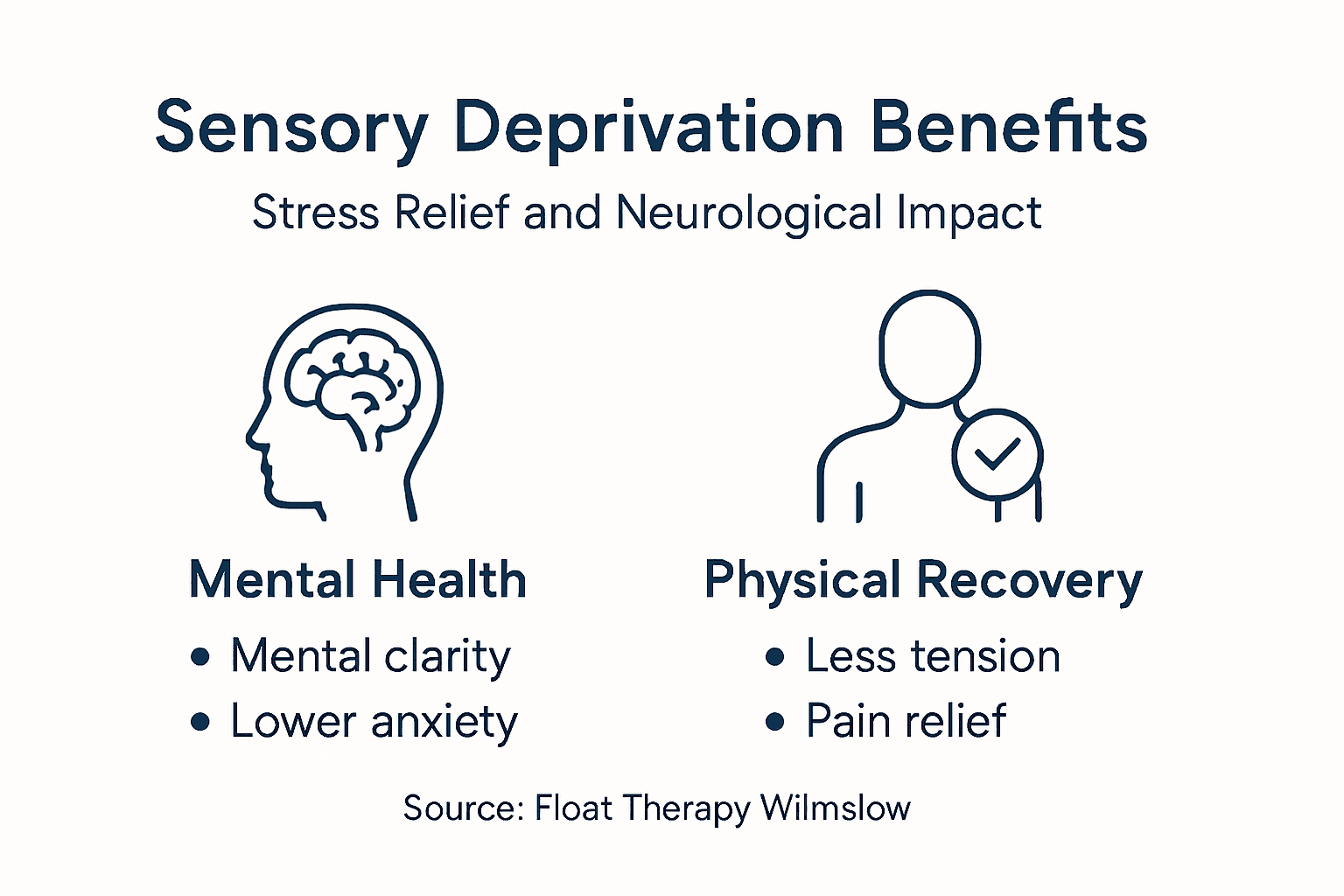
Neurological Benefits include enhanced mental clarity, reduced anxiety, and improved cognitive processing. Professional floatation therapy creates a sanctuary where the brain can recalibrate, free from constant external stimulation.
Here is a summary of the main therapeutic impacts of sensory deprivation:
| Area of Benefit | Key Impact | Typical Duration for Notable Effects |
|---|---|---|
| Mental health | Stress and anxiety reduction | 2-4 sessions |
| Physical recovery | Muscle relaxation, pain reduction | Immediate to several sessions |
| Neurological function | Enhanced clarity, focus | After initial acclimatisation |
| Emotional wellbeing | Improved emotional regulation | Consistent sessions over time |
Pro tip: Start with shorter floatation sessions of 30-45 minutes to gradually acclimate your nervous system and experience the transformative potential of sensory reduction.
Floatation Therapy: How Pods Work
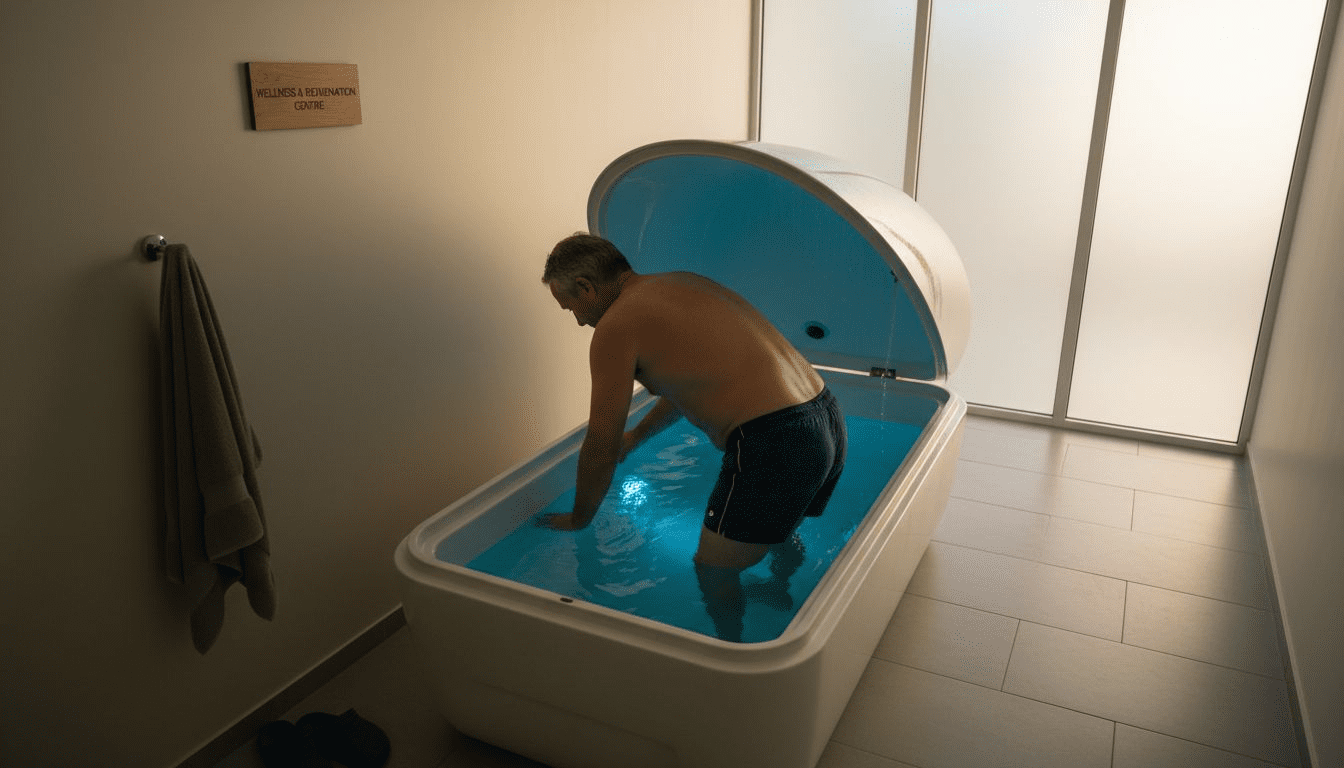
Floatation therapy represents a sophisticated approach to stress reduction and mental restoration, utilising specially designed pods that create an extraordinary sensory-neutral environment. Innovative floatation tank technology enables individuals to experience profound physical and psychological relaxation through carefully engineered environmental control.
The core design of floatation pods involves several precise scientific principles. These specialised tanks are engineered to eliminate virtually all external sensory stimuli, creating a unique environment where the human body can achieve unprecedented levels of rest and recovery. Key technological features include:
- Precise water temperature matching skin temperature (approximately 35.5°C)
- High-concentration Epsom salt solutions enabling effortless floating
- Soundproof and lightless interior environments
- Controlled humidity and ventilation systems
- Ergonomically designed pod structures
Physiologically, floatation pods work by reducing gravitational pressure, allowing muscles and joints complete relaxation. The high-salinity water ensures buoyancy, suspending users in a weightless state that immediately triggers the body’s natural relaxation response. This eliminates physical strain and redirects neurological resources towards internal healing and stress management.
Modern floatation pods represent a perfect intersection between advanced technology and holistic wellness principles.
The therapeutic mechanism involves systematically reducing external sensory input, which allows the brain to enter a uniquely restorative state. By removing visual, auditory, and tactile stimulation, floatation pods enable the nervous system to recalibrate, reducing cortisol levels and promoting deep meditative experiences.
Neurological Impact of floatation includes decreased stress hormone production, enhanced mental clarity, and improved cognitive processing. The controlled environment creates a sanctuary where the brain can reset and realign without constant external interruptions.
Pro tip: Wear comfortable, loose-fitting clothing and arrive at least 15 minutes early for your first floatation session to allow proper orientation and relaxation preparation.
Mental Health Benefits and Stress Reduction
Mental health is increasingly recognised as a critical component of overall wellness, with modern therapeutic approaches seeking innovative methods to reduce psychological stress. Mindfulness research from Oxford University highlights the profound connection between sensory interventions and mental restoration, demonstrating how targeted relaxation techniques can significantly improve psychological resilience.
Sensory deprivation offers a sophisticated approach to stress reduction by systematically addressing multiple dimensions of psychological wellbeing. The therapeutic mechanisms work through several interconnected pathways:
- Interrupting chronic stress response cycles
- Reducing cortisol and stress hormone production
- Enabling deep neurological recalibration
- Promoting parasympathetic nervous system activation
- Creating space for psychological reset and emotional processing
Psychologically, floatation therapy provides a unique environment where individuals can disconnect from external pressures and reconnect with their internal landscape. By removing sensory distractions, the brain enters a state of profound calm, allowing suppressed emotions and accumulated stress to be processed more effectively.
Sensory deprivation creates a sanctuary where the mind can heal itself, free from constant external stimulation.
The neurological benefits extend beyond immediate relaxation. Research on health psychology interventions indicates that regular sensory deprivation sessions can help individuals develop more robust stress management capabilities, improving overall mental health resilience.

Psychological Mechanisms of floatation therapy include enhanced emotional regulation, decreased anxiety symptoms, and improved cognitive flexibility. The controlled, supportive environment allows individuals to experience deep relaxation while developing more adaptive stress response patterns.
Pro tip: Combine floatation therapy with mindfulness meditation practices to amplify mental health benefits and develop more comprehensive stress management skills.
Physical Recovery and Pain Management
Physical recovery represents a complex interplay of physiological processes that can be significantly enhanced through targeted therapeutic interventions. Sleep and pain research from Warwick University reveals how specialised sensory environments can dramatically influence bodily restoration mechanisms, offering professionals and athletes sophisticated strategies for accelerated healing.
Floatation therapy provides a multifaceted approach to physical recovery by addressing several critical physiological domains:
- Reducing muscular tension and inflammation
- Promoting deep tissue relaxation
- Enhancing metabolic waste removal
- Stimulating natural healing responses
- Improving circulation and cellular regeneration
The weightless environment of sensory deprivation pods creates unique physiological conditions that accelerate recovery. By eliminating gravitational pressure, muscles can fully relax, allowing increased blood flow and reducing mechanical stress on joints and soft tissues. This environment enables the body to redirect energy towards repair and regeneration processes.
Physical recovery is not merely about rest, but about creating optimal conditions for the body’s intrinsic healing mechanisms.
Pain management research from Plymouth University emphasises non-pharmacological interventions as crucial complementary approaches to traditional pain treatment. Floatation therapy emerges as a powerful tool for managing chronic pain, offering a holistic method that addresses both physical discomfort and psychological stress associated with persistent pain conditions.
Physiological Mechanisms of floatation therapy include reduced cortisol levels, decreased muscle tension, and enhanced parasympathetic nervous system activation. These integrated responses contribute to more efficient recovery and improved pain perception modulation.
Pro tip: Combine floatation therapy sessions with targeted physiotherapy and gentle stretching to maximise physical recovery and pain management outcomes.
Potential Risks and Safety Considerations
Safety protocols in sensory deprivation therapy require careful consideration to ensure a positive and therapeutic experience. Research on sensory manipulation risks demonstrates the critical importance of controlled, consensual environments that prioritise individual psychological comfort and autonomy.
Potential risks associated with floatation therapy can be systematically categorised and mitigated through professional screening and personalised approaches:
- Claustrophobia and anxiety triggers
- Potential skin irritation from salt concentrations
- Risk of disorientation during initial sessions
- Rare instances of vertigo or balance disruption
- Individual variations in sensory processing
Medical screening is essential before commencing floatation therapy. Individuals with specific health conditions, such as epilepsy, severe mental health disorders, or open wounds, should consult healthcare professionals before participating. The controlled environment requires careful management to prevent potential psychological or physiological complications.
Sensory deprivation is a nuanced therapeutic technique that demands individualised, professional implementation.
Sensory experience research emphasises the importance of personalising sensory interventions. Professional facilities must conduct comprehensive intake assessments, considering each individual’s unique sensory processing capabilities and potential vulnerabilities.
Safety Protocols include mandatory pre-session consultations, comprehensive medical history reviews, and customised session parameters to ensure participant comfort and psychological safety.
Pro tip: Communicate openly with floatation therapy professionals about any pre-existing medical conditions or personal anxieties to ensure a tailored, safe therapeutic experience.
Comparing Sensory Deprivation to Other Therapies
Therapeutic interventions vary widely in their approach to stress relief and mental restoration, with sensory deprivation offering a uniquely comprehensive approach. Sensory processing research suggests that personalised, sensory-informed therapies can provide more nuanced and effective treatment compared to traditional methods.
Compared to conventional therapeutic approaches, sensory deprivation demonstrates distinct advantages:
- Immediate physiological relaxation response
- Direct neurological reset mechanism
- Minimal external intervention required
- Zero pharmaceutical dependency
- Holistic mind-body integration
- Measurable stress reduction without secondary effects
Traditional therapies like cognitive behavioural therapy, meditation, and medication management each address stress through different pathways. Sensory deprivation uniquely provides a comprehensive intervention by simultaneously targeting physiological, neurological, and psychological stress mechanisms, creating a more integrated healing experience.
Sensory deprivation represents an evolutionary leap in therapeutic approaches, bridging psychological insight with direct physiological intervention.
While other therapies might require prolonged engagement or external guidance, floatation therapy allows individuals to access profound relaxation states independently. The controlled environment eliminates external distractions, enabling a level of introspection and recovery difficult to achieve through conventional therapeutic techniques.
Comparative Advantages include accelerated stress reduction, enhanced self-awareness, and a non-invasive approach that complements rather than replaces existing therapeutic strategies.
This table compares sensory deprivation with traditional therapeutic approaches:
| Therapy Type | Sensory Input Control | Professional Involvement | Pharmaceutical Use |
|---|---|---|---|
| Sensory Deprivation/Floatation | Total reduction | Initial guidance only | None |
| Cognitive Behavioural Therapy | Minimal reduction | High | Sometimes |
| Meditation | Voluntary reduction | Optional | None |
| Medication Management | No reduction | High | Primary focus |
Pro tip: Consider sensory deprivation as a complementary therapy alongside existing treatments, not a complete replacement for professional mental health support.
Discover Profound Stress Relief at Float Therapy Wilmslow
If you have been exploring the benefits of sensory deprivation for stress relief you understand the challenge of finding a safe and effective method to achieve deep mental clarity and physical relaxation. The article highlights common pain points such as chronic stress, anxiety, and the need for a controlled sensory reduction environment to support neurological reset and emotional wellbeing. At Float Therapy Wilmslow we specialise in advanced floatation therapy within high-specification sensory deprivation pods filled with medical-grade Epsom salts designed to alleviate these exact concerns and promote profound introspection and calm.
Experience not just sensory reduction but a holistic approach to wellness that includes our dedicated contrast therapy suite featuring a high-performance infrared sauna and cold plunge pool. These therapies boost dopamine levels reduce inflammation and accelerate recovery to support both mental and physical restoration. Begin your journey to reclaiming balance and resilience today by exploring our advanced floatation therapy options or learn more about how our contrast therapy suite complements float sessions. For a tailored experience designed to soothe anxiety and chronic pain explore the full range of services and book your visit at Float Therapy Wilmslow.
Take control of your stress now and unlock the transformative power of sensory deprivation and contrast therapy at our premier wellness hub serving Wilmslow Alderley Edge and Greater Manchester communities.
Frequently Asked Questions
What are the psychological benefits of sensory deprivation?
Sensory deprivation can significantly enhance mental clarity, reduce anxiety, and improve emotional regulation by creating a calm, distraction-free environment that promotes relaxation and introspection.
How does floatation therapy work in aiding stress relief?
Floatation therapy uses specially designed pods to eliminate external stimuli, allowing the body to float effortlessly in warm salt water. This weightless state promotes deep relaxation, reduces cortisol levels, and helps the mind enter a meditative state, ultimately alleviating stress.
Are there any risks associated with sensory deprivation?
While generally safe, potential risks include claustrophobia, skin irritation from salt, or disorientation in initial sessions. It’s vital to consult with healthcare professionals before starting therapy, especially for those with specific health conditions.
How many sessions of floatation therapy are recommended for noticeable effects?
Typically, it is recommended to undergo 2-4 sessions of floatation therapy for significant stress reduction to occur. This allows for gradual acclimatisation and maximisation of therapeutic benefits.
Recommended
- Float Therapy Wilmslow – Ultimate Guide to Benefits
- Finding Serenity: The Powerful Benefits of Sensory Deprivation Tanks for Anxiety and Depression – Float Therapy Wilmslow
- Embrace Stillness: Exploring the Transformative Power of Sensory Deprivation Tanks for Meditation – Float Therapy Wilmslow
- The Power of Sensory Deprivation Tanks: A Natural Remedy for Insomnia – Float Therapy Wilmslow