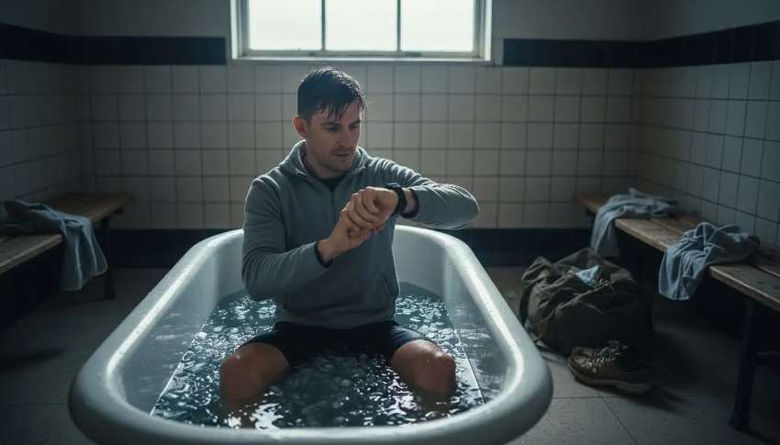
Ice baths have gone from an athletes-only ritual to one of the most searched-for recovery tools in the UK — and if you are curious, you are in good company. At our Wilmslow studio the ice bath (sometimes called a cold plunge) sits alongside an infrared sauna in a completely private suite, so it is also one of the easiest places to try one properly. This guide covers what an ice bath actually does, what the research genuinely supports, how cold and how long to go, and how to start safely.
What is an ice bath?
An ice bath is simply immersion in properly cold water — usually somewhere between 5°C and 15°C — for a short, deliberate period. Ours is kept at 7°C — cold enough that a couple of minutes is a real session, without any need to sit there clock-watching.
At Float Therapy Wilmslow the ice bath is one half of our contrast therapy suite: a private room with a 7°C ice bath and an infrared sauna that never exceeds 65°C, booked by the hour, moving between the two entirely at your own pace. No shared plunge pools, no strangers, no pressure.
What do ice baths actually do?
The moment you step into cold water, your body reacts decisively. Blood vessels near the skin narrow and blood moves towards your core. Your breathing quickens and your heart rate rises — the well-known cold-shock response, which is also why those first thirty seconds feel so dramatic. It peaks in the first thirty seconds and settles over the couple of minutes that follow, and slow, controlled breathing helps you ride it out. It also blunts with repetition — studies show the response measurably eases after a handful of immersions.
When you step out, the process reverses: vessels reopen, blood flows back into your muscles and skin, and most people feel a distinctive rush of warmth and alertness. Cold immersion also triggers a sharp rise in noradrenaline — which may be part of why the after-feeling is so bright and clear-headed, and why so many people describe leaving the suite feeling like a different person.
The benefits of ice baths
Muscle recovery
This is the best-studied benefit. Studies suggest that cold water immersion after hard exercise can ease delayed-onset muscle soreness — the DOMS that arrives a day or two after a heavy session — compared with simply resting. It is why ice baths have been a fixture in professional sport for decades, and why so many local runners and gym-goers build them into their recovery routine.
A clear head
Small studies suggest brief cold immersion can lift mood and alertness, and the experience matches: the combination of focused breathing and cold leaves very little room for a racing mind. Many guests tell us the mental reset is the reason they come back, more than the physical one.
Practice at doing hard things
There is something quietly valuable about choosing to do a difficult thing in a controlled way. The first time, thirty seconds feels like an achievement. A few visits later you are settling in calmly for three minutes — and that sense of progress tends to travel with you out of the suite.
Ice baths for recovery: what the research says
The research on cold water immersion is strongest exactly where most people want it: recovery. A widely cited Cochrane review found some evidence that cold water immersion reduces delayed-onset muscle soreness in the days after exercise compared with simply resting. Plenty of athletes also report feeling more recovered — which matters in its own right, because how recovered you feel shapes how you train next.
One useful planning note: if your current goal is building muscle size — where the evidence is strongest — or maximal strength, many athletes schedule their ice baths on rest days or after endurance sessions, rather than immediately after heavy lifting — keeping the potential recovery benefit without getting in the way of the adaptation they are training for. If in doubt, keep the cold for the days your body feels battered rather than straight after your biggest gym session.
How cold should an ice bath be?
Much of the research uses water between 10°C and 15°C, typically for ten to fifteen minutes. Colder water means most people stay in for less time: at 7°C — where ours is set — two to five minutes is the usual rhythm here. That is a practical convention rather than a research finding: the studies have mostly tested longer immersions in milder water, and no optimal dose has been established for water this cold. The exact number matters less than the principle: cold enough that your body properly reacts, warm enough that you can stay calm and in control.
How long should you stay in an ice bath?
At 7°C, two to five minutes is plenty. If it is your first time, thirty seconds to a minute is a genuinely good session — the cold-shock response is at its strongest when you are new to it, and the right move is always to build up gradually. More time is not better time: once you are shivering hard, you have passed the useful part. Step out, warm up slowly, and come back another day.
Are ice baths safe?
For most healthy people, short, controlled cold immersion in a studio setting — where you have been shown what to do — is well tolerated, and a private studio suite is a far easier place to learn than a DIY wheelie bin of ice in the garden. You step in gradually, you control the pace, and the sauna is right there when you are done.
That said, cold water is a real physiological stress. If you have a heart condition, high blood pressure, Raynaud's, are pregnant, or have any condition that makes you unsure, speak to your GP before booking — and if anything ever feels wrong mid-session, get out and warm up. Our team talks every first-timer through the process, and our cold plunge safety checklist covers preparation in more detail.
Ice bath or cold shower?
A cold shower is a decent way to test whether you enjoy deliberate cold — it is free and it is right there in your bathroom. But it is not the same experience: a shower hits part of your body at a time, and its temperature drifts with the seasons rather than holding steady where you want it. Full immersion in a temperature-controlled ice bath produces the complete response — the cold-shock, the stillness, the after-glow — in a way a shower cannot quite reach. Plenty of our regulars started with cold showers and describe the first real plunge as a different thing entirely.
Why pair an ice bath with an infrared sauna
The ice bath on its own is powerful. Alternating it with heat is something else again. Moving between a 65°C infrared sauna and a 7°C plunge — a few unhurried rounds over an hour — is called contrast therapy, and it is the way most of our guests take their cold. The heat makes the cold feel achievable; the cold makes the heat feel earned; and the hour becomes a complete reset rather than a dare. There is a reason sauna-then-plunge is the classic order — and in a private suite you can experiment freely until you find your own rhythm.
A solo contrast therapy session is £40 for a full private hour, or £60 for two people sharing the suite. New to it? The Intro to Contrast Therapy gives new customers three sessions for £90, valid for 12 months.
Frequently asked questions
What do ice baths actually do?
Cold immersion narrows blood vessels and moves blood to your core; when you get out, fresh blood flows back through your muscles and skin. It also triggers a rise in noradrenaline, which researchers think may be part of why so many people describe feeling alert and clear-headed afterwards. Studies suggest the clearest potential benefit is eased post-exercise soreness; many regulars also tell us the mental reset is what keeps them coming back.
How long should a beginner stay in an ice bath?
Thirty seconds to a minute is a solid first session at 7°C. Build up gradually over a few visits — two to five minutes covers it even for seasoned regulars. Never push through heavy shivering to hit a number.
How cold is the ice bath at Float Therapy Wilmslow?
Our ice bath is kept at 7°C, in a private suite of your own alongside an infrared sauna (maximum 65°C). Sessions are 60 minutes and self-paced — you decide how many rounds of hot and cold to do.
How often should you take ice baths?
Consistency beats heroics. One to three short sessions a week is a common rhythm among regulars, adjusted to how your body feels and how hard you are training. There is no prize for daily plunging.
Are ice baths good for muscle recovery?
Studies suggest cold water immersion can ease delayed-onset muscle soreness after hard exercise, and many athletes report feeling more recovered. If your goal is building muscle size or maximal strength, consider scheduling cold sessions away from your heaviest lifting days.
Do I need any experience to try an ice bath?
None at all. Most first-timers at our studio have never done deliberate cold before. The suite is private, our team explains everything before you start, and you are in complete control of how far you take it — the door to a warm shower is always a step away.